About the Staby
A working dog by nature, a family dog at heart.
The Stabyhoun was bred in Friesland, in the northern Netherlands, to do everything a small farmer needed a dog to do: hunt, guard, catch pests, and stay close. Centuries later, those instincts are still there. The Staby is a devoted companion with a working dog’s independence and a family dog’s warmth.
At A Glance
Males 21 in at the shoulder, females 19 in
Low maintenance. Self-cleaning.
Pronunciation
Stah-BAY-hoon
A dog that stands by its farmer.
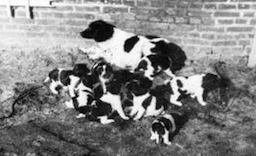
The Stabyhoun comes from the Frisian forest region of the northern Netherlands, where it was the working dog of small landholders and farmhands, not the hunting estates of the wealthy. The name means “stand by me” in Frisian, and the breed lived up to that. A Staby hunted moles and small game, guarded the yard, and stayed close. Versatile by necessity.
The breed was officially recognized by the Dutch Kennel Club in 1942. ASA was established in 2006, the same year the breed entered the AKC Foundation Stock Service. Today less than 10,000 Stabyhouns exist worldwide, making it one of the rarest breeds in existence.
Built for a full day’s work in the field.
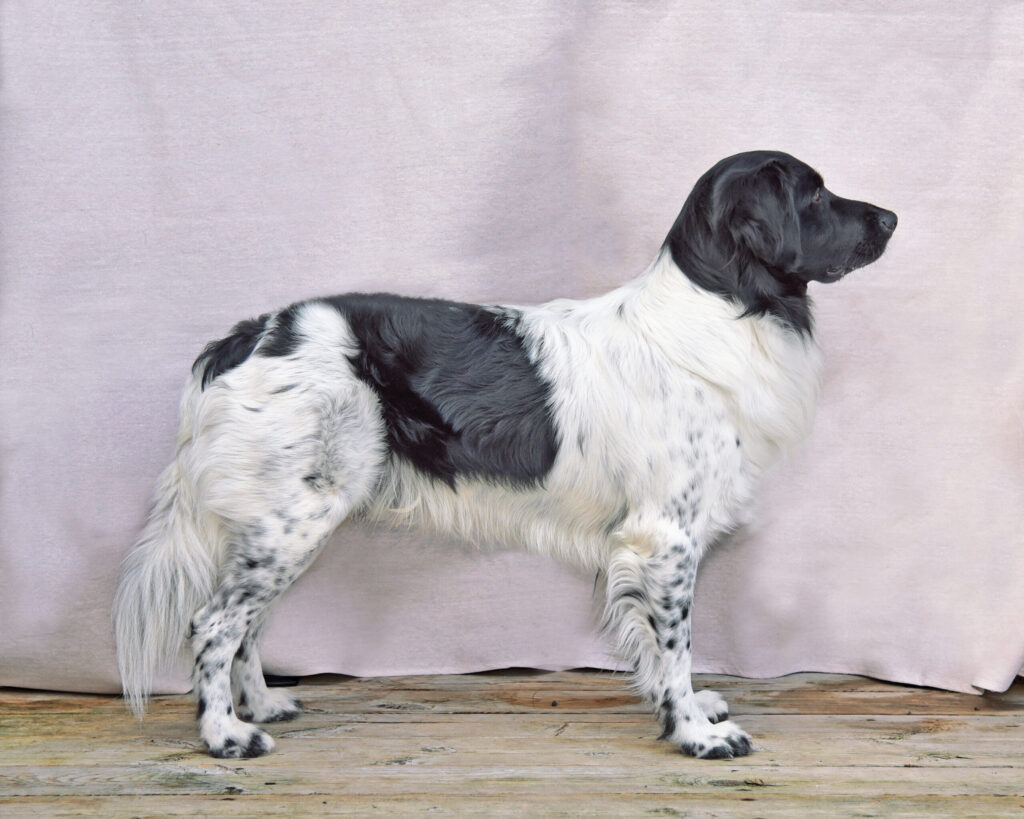
The Stabyhoun is a medium-sized pointing dog, slightly longer than tall, with a sturdy build that prioritizes function over appearance. The longer-than-high proportion gives the dog the reach and drive needed for a working trot that can cover ground all day without tiring.
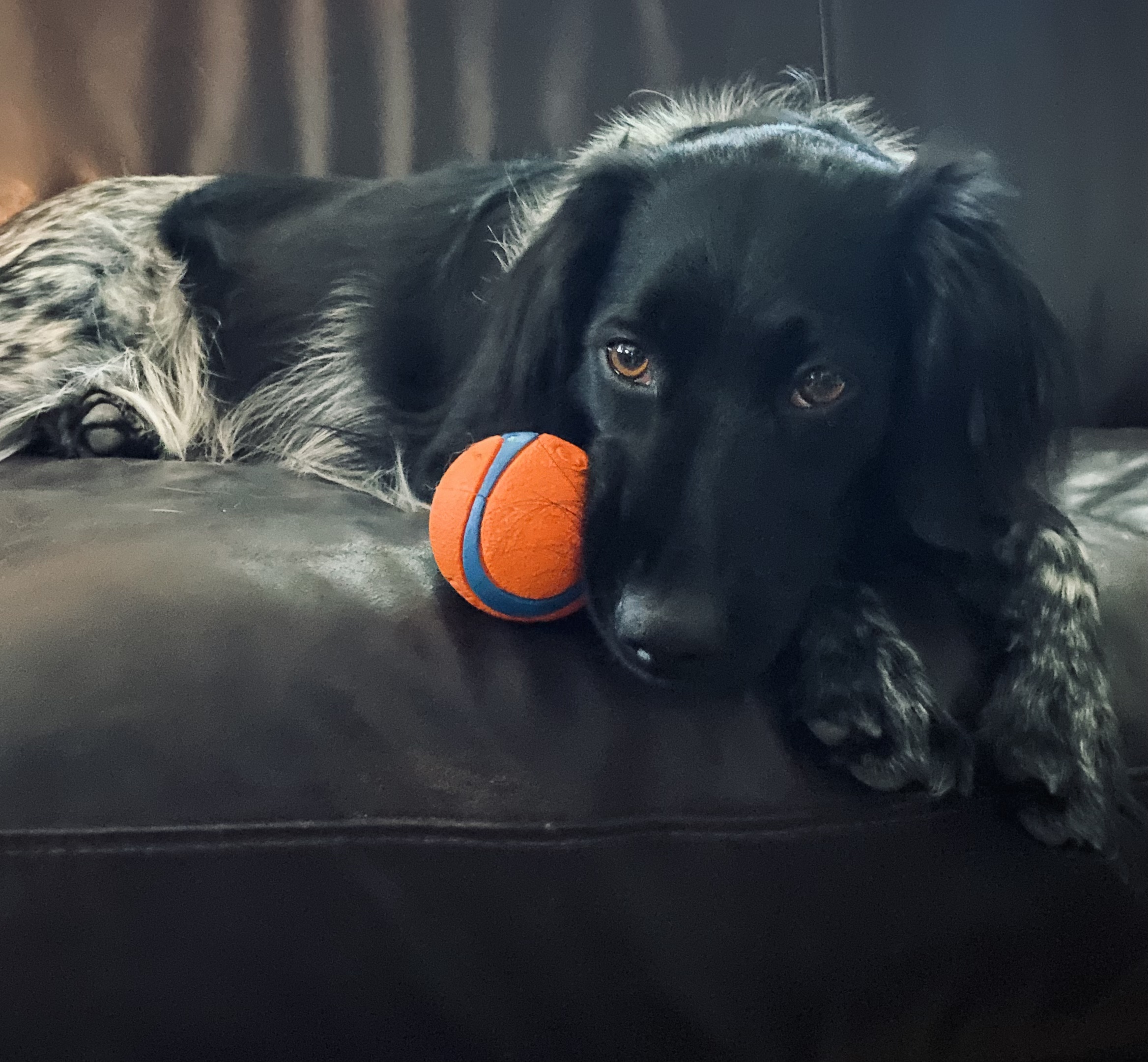
The coat is medium length with feathering on the chest, legs, and tail. It gives the impression of a long-haired dog but is closer to semi-long. The tail is carried low at rest with a slight upward curve at the tip. In working situations the tail rises, and the white tip historically served as a visible marker for the hunter in tall grass or brush.
The head is typically predominantly colored with a white blaze optional. The overall picture should be a balanced, functional build. The Stabyhoun should look capable, not flashy.
Independent, devoted, and always paying attention.
The Stabyhoun was bred to work on its own, and that independence is still very much part of the dog. A Staby is not a dog that simply does what it is told. It thinks, it watches, it decides. With consistent, positive guidance that independence becomes one of the breed’s best qualities. Without it, the dog becomes difficult.
Stabys are deeply attached to their families and tend to be cautious with strangers until they have made their own assessment. They are good with children, though like any dog they have limits and should not be left without supervision. They are energetic enough to want a real job, whether that is a daily run, a sport, or a task with their person.
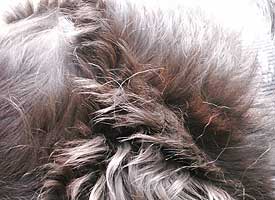
The Staby coat is lower maintenance than it looks.
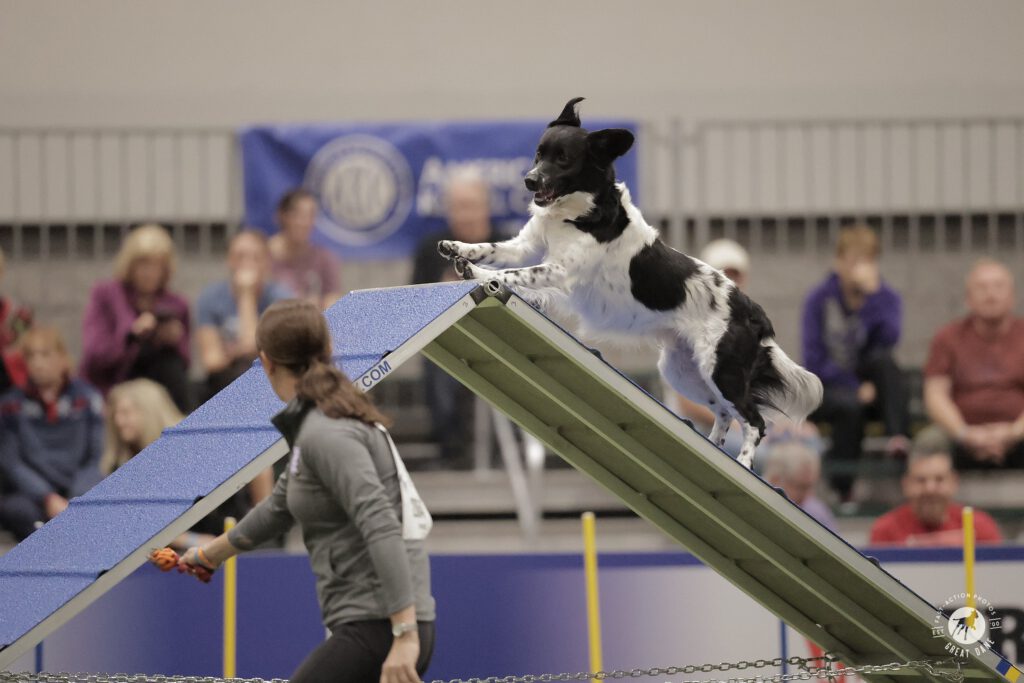
Give them a reason and they’ll give you everything.
The Stabyhoun is intelligent and eager to work with its person, but it is not a breed that responds to force or repetition. Push too hard and the dog simply stops. The training approach that works is patient, positive, and varied. Stabys that are trained this way are accurate, focused, and genuinely fun to work with.
The breed excels at a wide range of activities: agility, scent work, fieldwork, obedience, and dock diving are all good fits. What matters more than the activity is that the dog has something to engage its mind alongside its body.
A rare breed requires active stewardship.
With a small population, the Stabyhoun’s long-term health depends on careful management of genetic diversity. ASA works alongside the Dutch parent club, the NVSW, which maintains the international breed registry and population database. Every breeding approved through ASA considers not just the health of the individual dogs but the health of the breed as a whole.
[Known health conditions and what ASA monitors for. Placeholder until health content is provided.]

Is a Staby right for you?
This is a rare breed with a careful placement process.
Stabys do best with people who are willing to invest in the relationship the breed requires. If that sounds like you, the next step is understanding how ASA matches families with breeders.